


















Many people celebrate Valentine’s Day without knowing its origin. Valentine’s day traces back to a mix of ancient Roman festivals and early Christian traditions, particularly the legend of Saint Valentine, which shaped the holiday’s association with love. Before Valentine’s Day was a day full of love, the Romans celebrated Lupercalia from February 13 to 15, a festival dedicated to Faunus.
In the late 5th century, Pope Gelasius I, abolished Lupercalia and declared February 14 as Valentine’s Day, honoring Saint Valentine, likely to “Christianize” the tradition. Although there were many Christians named Valentine, the most popular legend describes Saint Valentine as a priest who secretly performed marriages for young couples when the Roman emperor banned marriage for his soldiers.
During the Middle Ages, Valentine’s Day began to develop romantic meanings. It was believed that birds began to mate and pair off in mid February; connection with Valentine’s Day. During this time, the idea of “love letters” and “Valentines” began to emerge. People began exchanging handwritten notes filled with gratitude and love. This shows the first signs of Valentine’s Day.
In the 18th century, Valentine’s Day letters and poems grew in popularity, but not everyone liked the idea of expressing their feelings towards one another. The early 19th century saw an increase in Valentine’s Day cards, fueled by advances in technology, such as the Penny Post. The Penny Post was so special compared to any other inventions because it allowed letters weighing up to half an ounce to be sent to anyone in the world. The affordability of sending someone a letter helped many people to participate in Valentine’s Day
Not all Valentines were romantic, some people sent sarcastic insults “vinegar Valentine’s” because of this, the tradition became sarcastic and morally wrong. Despite the decline in artistry, Valentine’s Day remained popular going into the 20th century. In 1929, the tradition of sending Valentine’s saw a revival when a company such as Hallmark began mass production of Valentine’s Day cards. With printed designs, decorative lace, and sentimental messages. This commercialization made Valentine’s Day more accessible to people since it was cheap, and you can make it yourself.
Throughout the 20th century, Valentine’s Day continued to grow in popularity, especially in the U.S and Europe. Restaurants and florists began to market the holiday heavily, encouraging many couples to celebrate with romantic dates and thoughtful dinners. The day expanded through romantic ideas, many people gave friends, families, and classmates a Valentine’s Day card as a token of gratitude.
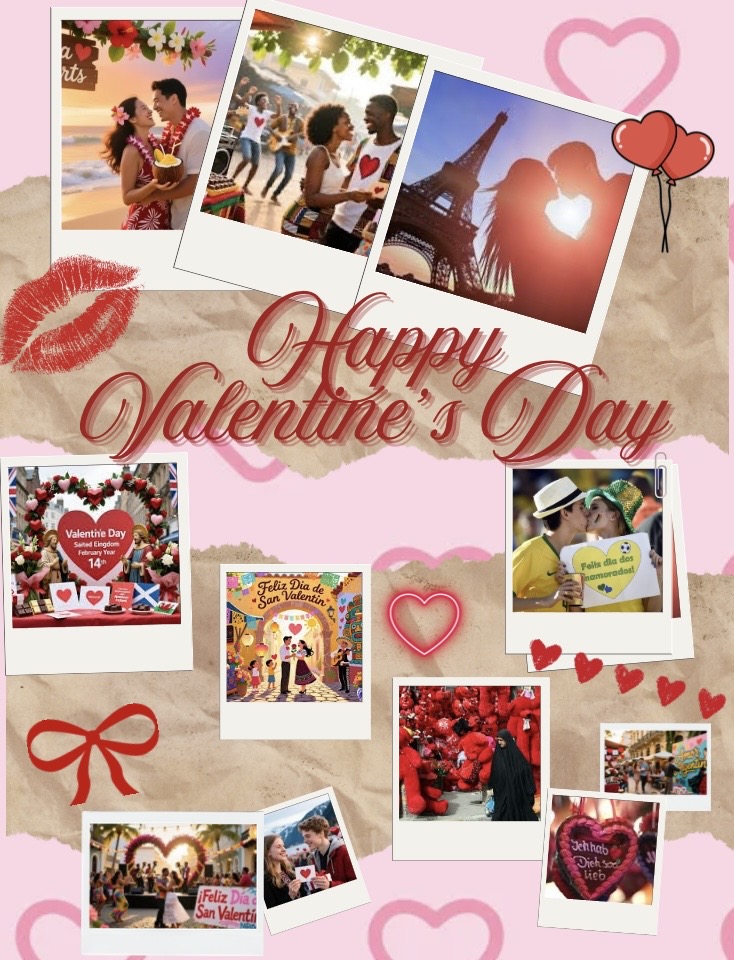
Today Valentine’s Day is celebrated around the world in many different ways. While some people focus on romance, others use the day to spread gratitude towards their friends and family members. Valentine’s Day has evolved into a global celebration shaped by centuries of cultural change.